
No items found.
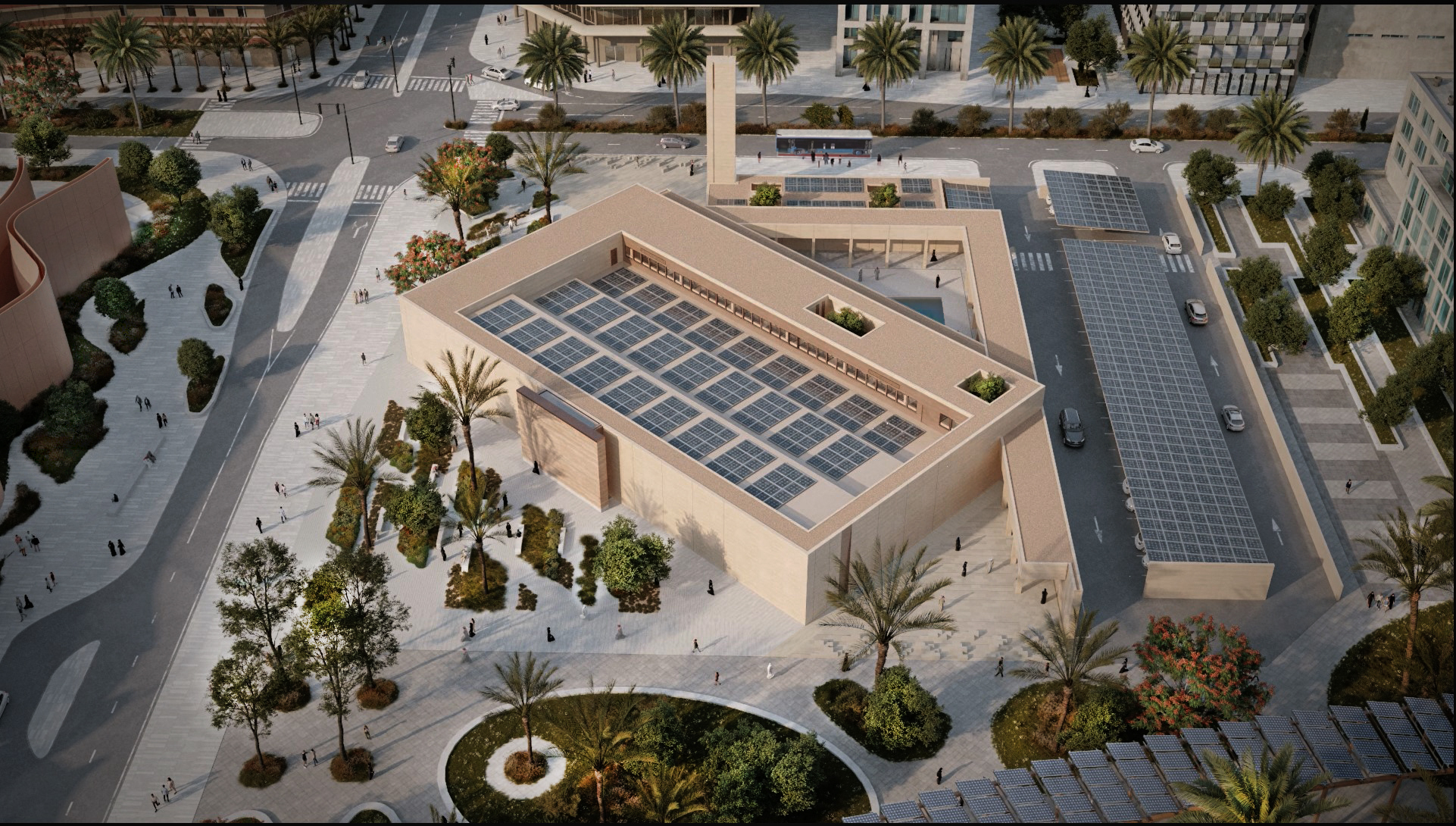
Set at the heart of Masdar City, Abu Dhabi’s global hub for sustainable urban innovation, Matthews has provided Cost Management Consultancy Services on the regions first Net-Zero Energy Mosque.
Spanning 2,349 square meters, with a circa 1,595-square-meter prayer area, the mosque will accommodate over 1,300 worshippers, making it Masdar City’s second and most sustainable mosque to date.
Designed by Arup and developed by Masdar City, this project reflects a pioneering shift in how civic and religious spaces can support global climate goals while respecting cultural heritage. With its integration of traditional materials, innovative engineering and net zero-energy performance, the mosque stands as a powerful symbol of the UAE’s leadership in sustainable development. Once complete, it will serve both as a spiritual sanctuary and a case study in climate-resilient design for hot-arid regions.
The design leverages passive strategies as a first principle, minimising reliance on mechanical systems while maximising comfort and energy performance. Producing 100% of its annual energy needs via 1,590 m² of photovoltaic panels, the design reduces energy demand by 35% compared to international baselines using features like rammed earth structure, tiered operable skylights for daylight and ventilation, shaded colonnades, and high-performance insulation. Meanwhile, Eco-Centric Construction ensures at least 70% of construction waste will be diverted from landfills, using predominantly local materials that will be recycled wherever possible to minimise embodied carbon.
Seeking ILFI Net Zero Energy, LEED Platinum, Estidama 4-Pearl, and WELL Gold certifications, emphasising occupant health and wellbeing, the world’s first Net Zero Mosque aims to set a new industry standard for houses of worship both locally and internationally.
Working with Matthews was a really positive experience. They were proactive and collaborative from the start and gave expert cost consultancy advice throughout the pre-contract stage. Whether it was putting together the CAPEX framework, keeping a close eye on costs, preparing estimates, or supporting us through the tender analysis, their input made a real difference and helped us to achieve a design that stayed on budget. - Paul Simmonite, Project Director, Arup